


About the B.Com. Program under NEP
Bachelor of Commerce and Bachelor of Commerce (Honours)
The Curriculum and Credit Framework for Undergraduate Programme under National Education Policy(NEP) 2020. Excerpts from Ordinance OA-38.
The college offers students three programmes to choose from:
-
- B.Com. (Financial Accounting) with Honours
- B.Com. (Cost Accounting) with Honours
- B.Com. (Business Management) with Honours OA
...
The Curriculum and Credit Framework for Undergraduate Programmes (CCFUP) under National Education Policy
(NEP) 2020 envisages the incorporation of a flexible choice-based Credit system, multidisciplinary approach with
multiple entry and exit options, to facilitate students to pursue their career path by choosing the subject/field of
their interest.
OA-38.2 OBJECTIVES
The General Objectives of the Programme shall be:
(i) To recognize, identify, and foster the unique capabilities of each student to promote her/his holistic
development.
(ii) To provide flexibility, so that learners can select their learning trajectories and Programmes, and thereby
choose their own paths in life according to their talents and interests.
(iii) To impart multidisciplinary and holistic education across the sciences, social sciences, arts, humanities
and sports.
(iv) To emphasize on conceptual understanding rather than rote learning; critical thinking to encourage
logical decision-making and innovation; ethics, human & constitutional values; life skills such as
communication, teamwork, leadership, and resilience.
(v) To encourage extensive use of technology in teaching and learning, removing language barriers,
increasing access for Divyang students, and educational planning and management.
(vi) To provide respect for diversity and respect for the local context in all curricula, pedagogy and policy.
(vii) To uphold equity and inclusion as the cornerstone of all educational decisions, to ensure that all students
are able to thrive in the education system, and the institutional environment is responsive to differences,
to ensure that high-quality education is available for all.
(viii) To have rootedness and pride in India, and its rich, diverse, ancient, and modern culture, languages,
knowledge systems, and traditions.
OA-38.4 DURATION OF THE PROGRAMME
(i) The duration of the UG Programme shall be of Four Years/Eight Semesters with multiple entry and exit
options.
(ii) A student may also be permitted to take a break from the Programme during the period of study.
(iii) The total duration for completion of the UG Programme shall not exceed seven years from the date of
initial registration.
(iv) Every Academic Year shall consist of two Semesters.
(v) In addition, there shall be a Summer Term during the vacation.
OA-38.4.1 UG CERTIFICATE/UG DIPLOMA AND DEGREES TO BE AWARDED
The following Certificate/Diploma/Degrees shall be awarded as below:
(i) UG Certificate (NCrF Level: 4.5): Students exiting on completion of 1 year (2 Semesters) of study in
the chosen broad discipline having fulfilled the Credit requirement and successfully completed a
4 Credit Vocational Course during the summer term (vacation) of the first year.
(ii) UG Diploma (NCrF Level: 5): Students exiting on completion of 2 years (4 Semesters) of study in
the chosen broad discipline having fulfilled the Credit requirement and successfully completed a
4 Credit Vocational Course during the summer term (vacation) of the second year.
(iii) Bachelor of Arts/Bachelor of Commerce / Bachelor of Science/ Bachelor of Computer Applications/
Bachelor of Business Administration/Bachelor of Social Work/Bachelor of Performing Arts and such other
Degrees (NCrF Level: 5.5): after the successful completion of 3 years in the Programme and the related
Credit requirements, as specified elsewhere in this Ordinance.
(iv) Bachelor of Arts/Bachelor of Commerce/Bachelor of Science/Bachelor of Computer Applications/Bachelor
of Business Administration/Bachelor of Social Work/Bachelor of Performing Arts (4 years Honours) and
such other Degrees (NCrF Level: 6): after the completion of 4 years in the Programme and the related
Credit requirements, as specified elsewhere in this Ordinance.
(v) Bachelor of Arts / Bachelor of Commerce /Bachelor of Science/ Bachelor of Computer Applications/
Bachelor of Business Administration/Bachelor of Social Work/Bachelor of Performing Arts (4 years Honours
with Research) and such other Degrees (NCrF Level: 6): after the completion of 4 years in the Programme
and the related Credit requirements, as specified elsewhere in this Ordinance.
(vi) Interdisciplinary or Multidisciplinary Degree: Students who opt for 3 year or 4 year Degree Programmes
shall be awarded a degree in Interdisciplinary or multidisciplinary subjects as the case may be.
(a) Interdisciplinary Degree: A student who opts for interdisciplinary subjects shall be awarded a
Bachelors Degree/Bachelors Degree (Honours)/Bachelors Degree (Honours with Research) in
Interdisciplinary Subjects. For example if a student opts for subjects like Chemistry, Zoology and
Botany s/he shall be awarded a BSc in Interdisciplinary Subjects (Chemistry, Zoology and Botany)
(b) Multidisciplinary Degree: A student who opts for multidisciplinary subjects like Mathematics, Finance
and Economics will be awarded a Bachelors Degree/ Bachelors Degree (Honours) Bachelors Degree
(Honours with Research) in Multidisciplinary Subjects (Mathematics, Finance and Economics).
OA-38.5 ELIGIBILITY FOR ADMISSION
The eligibility for admission to the Four Year UG Degree Programme shall be as follows:
(i) The Higher Secondary School Certificate (Std. XII) examination conducted by the Goa Board / equivalent
body, after successful completion of Grade 12 or equivalent stage of education corresponding to Level-4.
(ii) A student not covered under any of the above categories but desirous of seeking admission to the
said Programme may apply to the University /College. However, the Vice Chancellor along with
Dean of the concerned School/Faculty and Chairperson(s) of Board(s) of Studies of concerned
subjects shall decide the eligibility in such cases.
(iii) A student admitted for Semester-I /III/V/VII shall be deemed eligible for admission to Semester-II/IV/VI/
VIII, of each respective year provided;
a) S/he has no backlogs of previous Semesters to be eligible for admission to Semester V.
b) S/he has no backlogs of Semester V and VI to be eligible for admission to Semester VII.
(iv) A student migrating from another recognized University and desirous of direct admission to UG Programme
shall be eligible for admission based on the earned Credits in the subjects for which admission is sought.
This is subject to the provisions of the Academic Bank of Credits (ABC) Ordinance of Goa University. The
Vice-Chancellor along with Dean of the concerned School/Faculty and Chairperson(s) of Board(s) of Studies
of concerned subjects shall decide the eligibility.
(v) A student with a UG Certificate shall be eligible to take admission in the Third Semester of the Degree
Programme within three years of exit and complete the Degree Programme within the stipulated maximum
period of seven years.
(vi) A student with a UG Diploma shall be eligible to take admission in the Fifth Semester of the Degree
Programme within a period of three years of exit and complete the Degree Programme within the
maximum period of seven years.
(vii) A student who has exited with a UG Degree shall be eligible to take admission in the Seventh Semester
of the Degree Honours Programme within a period of three years and complete the Degree Honours
Programme within the maximum period of seven years.
(viii) A student who obtains 75% and above or equivalent CGPA of the total marks obtained in the
first Six Semesters shall be eligible to take admission to the four-year Degree (Honours with
Research) at the Seventh Semester. The equivalent CGPA shall be 8.25 as per the CGPA calculation
given in this Ordinance.
(ix) The seven years duration shall be counted with effect from admission by him/her to the first Semester of
UG Programme.
OA-38.5.1 LATERAL ENTRY FOR STUDENTS REGISTERED UNDER OC-66
(i) Students already enrolled in the UG Programme under Choice Based Credit System (CBCS) shall be
permitted to seek admission to the Four-year Undergraduate Programme effective from Academic Year
2024-2025.
(ii) The concerned Institution shall provide Bridge Courses (including online Courses) approved by the Board
of Studies to enable students to transition from CBCS to CCFUGP.
OA-38.5.2 CLASS/DIVISION STRENGTH
(i) Ordinarily, the number of students in a class/division shall not exceed sixty.
(ii) The University shall permit 10% additional seats to accommodate requests for a change of Major
wherever required.
(iii) Any unfilled or vacant seats shall be filled with those seeking a change of Major.
(iv) Preference shall be given to those who scored highest CGPA and have no backlog in the first year.
OA-38.7 COURSES AND COURSE STRUCTURE
(i) A Course shall consist of either of the following:
(a) Only theory component,
(b) Only practical component or,
(c) Both theory and practical components.
For Courses which have both theory and practical components, the ratio of 75% theory and
25% practical shall be maintained with separate heads of passing. However, in case of Skills
Enhancement Courses (SEC) and Vocational (Exit) Courses the emphasis shall be on hands on
training/Practical component. The pedagogy for a Course shall include any of the following:
Lectures, tutorials, practicum, seminar, internship, studio activities, field/laboratory projects,
community engagement and such others or a combination of the above forms as recommended
by the Board of Studies.
(ii) A Programme shall comprise of the following categories of courses:
(a) Disciplinary/Interdisciplinary Major (Core) A Major course will provide a student the opportunity
to pursue in-depth study of a particular subject or discipline. Credits earned by a student from the
two Major Courses of the Broad Discipline/Discipline in Semester I and II shall be counted towards
total Major Credits.
(b) Disciplinary/Interdisciplinary Minors Students may opt for Minor courses from Disciplinary/
Interdisciplinary areas including skill- based courses relating to a chosen Vocational Education and
Training. Students, who successfully complete the requisite number of courses (as specified in the
OA-38 12.2 & 12.3) in a Disciplinary or an Interdisciplinary area of study other than the chosen Major,
shall qualify for a Minor in that discipline or in the chosen Interdisciplinary area of study. To qualify for a Minor, a student shall have to earn a minimum of 12 Credits in the chosen Minor. A student shall declare
at the end of Semester II the subjects s/he wishes to opt for under Minor.
(c) Vocational Education and Training (VET) VET shall form an integral part of the UG Programme
to impart skills along with theory and practical. A minimum of 12 Credits will be allotted
to the Minor stream relating to VET which can be related to the Major or Minor Discipline
or choice of the student. A student shall have to declare subject/courses under VET at
the end of Semester II. In case of Programmes such as BBA, BCA internship could be
offered in lieu of VET.
(d) Multidisciplinary Courses (MC)
UG students shall be required to undergo Three Introductory-level courses relating to any Broad
Discipline that they have not undergone at the HSSC level as given below:
Natural and Physical Sciences, Mathematics, Statistics and Computer Applications Library,
Information and Media Sciences, Commerce and Management, Humanities and Social Sciences.
(e) Value-Added Courses (VAC)
The following are the VAC common to all UG students:
Understanding India, Environmental Science/Education, Digital and Technological Solutions, Health
& Wellness, Yoga Education, Sports, Fitness, courses related to National Service Scheme (NSS),
National Cadet Corps (NCC) and such other courses. However, a two Credit Environmental Science
Course shall be mandatory under VAC.
(f) Ability Enhancement Courses (AEC)
Students shall achieve competency in a Modern Indian Language (MIL) and in the English Language
with special emphasis on communication, reading and writing skills. Foreign National/ Person of
Indian Origin/Non-Resident Indian/Foreign Board students may opt for additional English Language
Courses or any other Foreign Language Courses in lieu of MIL.
(g) Skills Enhancement Courses (SEC)
SECs shall focus on practical skills, hands-on training, soft skills and such other courses to enhance
the employability of students.
(h) Summer Internship / Apprenticeship (I)
Students shall be provided with opportunities for Internships in the summer term.
Students shall undergo Internships in a Firm, Industry, Organizations, Laboratory with Faculty
and Researchers (in their own or other HEIs), Health and allied areas, Local Governments (such
as Panchayats and Municipalities), Parliament or elected representatives, media, artists, crafts
persons, NGOs and other such organizations to improve their employability.
(i) Community Engagement and Service (CES)
Through CES students shall be exposed to socio-economic issues in society to enable them to
generate solutions to real life problems. CES shall be offered either as a part of the summer term
activity or part of Major or Minor Course depending upon the Major Discipline.
(j) Project/ Field-Based Learning (P)
The Project work shall be compulsory and shall be offered in lieu of a Major Course. Field-based
learning may be a part of summer term activity.
(k) Dissertation (D)
A student opting for a 4-Year Bachelor‟s Degree (Honours with Research) shall have to complete a
12 Credits Dissertation under the guidance of a Faculty member. An Internship shall be offered In
lieu of Dissertation where Internship is an integral component of the Curriculum.
(l) Extra-curricular Activities (EA)
Sports, Adult Education/Literacy initiatives, mentoring school students and other similar activities.
National Service Scheme (NSS) and/or National Cadet Corps (NCC) courses that are not opted by a
student asVAC may be permitted under EA.
OA-38 7.1 COURSES OPTED FROM OTHER INSTITUTES:
Students shall be permitted to opt Credits/Course from any other Colleges/Institutions affiliated to the Goa
University.
OA-38.14 SCHEME OF EXAMINATION
The Scheme of Examination shall be as follows:
(i) Evaluation shall be based on continuous assessment, in which Intra-Semester Assessment (ISA) and Semester End
Assessment (SEA) will contribute to the final grade. ISA will consist of class tests, mid-Semester examination(s),
homework assignments, and such other modes of evaluation, as determined by the faculty in charge of the
courses of study. Progress towards achievement of learning outcomes will be assessed using the following:
time-constrained examinations; closed-book and open book tests; problem-based assignments; practical
assignment, laboratory reports; observation of practical skills; individual project reports (case-study reports);
team project reports; oral presentations, including seminar presentation; viva voce; computerized adaptive
assessment, surprise test, modular certifications, and any other modes of assessment.
(ii) The evaluation for the Courses shall comprise of ISA and the SEA.
(a) One Credit shall carry 25 marks.
(b) The ISA shall carry 20% of maximum marks allotted for the Course, and SEA shall carry 80% marks. A
Course of Four Credits for total of 100 marks, having only Theory, shall have ISA for 20 marks and SEA for
80 marks.
(c) There shall be no ISA for the One Credit Practical Component of Four Credit Courses. A Four Credit Course
(100 marks) comprising Theory (Three Credits) and Practical (One Credit) shall have ISAs only for the Theory
Component (15 Marks), and SEA Theory Component (60 marks). The One Credit Practical Component has
only SEA (25 marks).
(d) There shall be no ISA for a One Credit Practical Course.
(e) In case of Two-Four Credit Practical Courses, the ISA shall have 20% weightage and SEA 80%.
(f) Courses of any other number of Credits shall have a proportionate marking system.
(iii) Intra-Semester Assessment (ISA).
There shall be three ISAs in a given Semester for the theory Component of each Course of 2 Credits and above,
of which a minimum of 50% shall be evidence based. The two best scores shall be considered for the final
ISA marks for papers of 2 Credits and above. For a course of one Credit the best score out of two ISAs shall
be considered. ISAs may be through a written test or any other alternative mode of evaluation, including
assignments, presentations, oral or online test, MCQs, open book test, and any other mode of assessment.
(a) There shall not be any averaging of ISA marks.
(b) Generally, the ISA for a given Course shall be conducted by the teacher/s teaching that Course.
(c) The ISA schedule shall be notified at the beginning of the Semester.
(d) ISA marks shall be communicated to students within two weeks of the ISA.
(e) Ordinarily, ISA-I shall be completed by the end of the Fifth week after the commencement of the Semester
and ISA-II by the end of the Tenth week of the Semester.\
(f) Students who fail to appear for an ISA due to a genuine reason shall be given another opportunity, to
complete the ISA.
(g) There shall be a Committee appointed to monitor the conduct of ISAs.
(h) To be eligible to appear for the Semester End Assessment (SEA), a student shall be required to appear for
a minimum of two ISAs in each Course.
(iv) Semester End Assessment (SEA)
(a) SEAs shall be conducted at the conclusion of every Semester, and shall cover the entire syllabus prescribed
for the respective Course.
(b) A student shall be considered to have successfully fulfilled the requirements of a Semester to be eligible to
appear for the SEA provided the student has appeared for two ISAs in a Course, and fulfils the minimum
attendance requirements as per the relevant rules of the University. A student failing to fulfil these
conditions shall have to repeat the course.
(c) The detailed procedure for the conduct of SEA and subsequent assessment shall be as notified by the
University.
(d) The pattern of question paper(s) to be set for the SEA in a given course and the scheme of marking shall
be decided by the respective BoS. For this purpose, the BoS shall frame specimen question paper(s) in the
various courses concerned for the information of the students. Similarly, for practical examinations, the
number of laboratory exercises, marks distribution for each exercise and other relevant details shall be
decided by the respective BoS.
(e) To pass a Course a student shall have to obtain a minimum of 40% in ISA and SEA together. There is no
separate passing for ISA and SEA.
(f) The duration of SEA theory paper carrying up to 40 marks shall be 1 hour, and papers of above 40 and up
to 80 marks shall be of 2 hours duration.
(g) Supplementary exams shall be held at the end of the academic year immediately after SEA.
(v) Paper Setting.
The detailed procedure for the paper setting of shall be notified by the University.
(vi) SWAYAM Courses Students shall have the option to earn up to 40% of the Credits through online SWAYAM
Courses recommended by the Board of Studies and approved by Academic Council preferably in the beginning
of each Semester. Students shall inform Programme Director/Head of the Department before registering for
the SWAYAM Courses. The certificates/marks obtained by the students after successful completion of SWAYAM
course/s has to be forwarded to the Controller of Examination along with Semester marks through the Principal
of the College/Dean of the Schools for uploading the Credits in the Academic Bank of Credits (ABC) account of
the student.
(vii) Students shall be permitted to opt Credits/Course from any other Colleges/Institutions affiliated to the University.
The assessment and evaluation of the Course shall be conducted by the concerned College/Institution offering
the Course, the Institution shall be responsible for forwarding the marks to the parent institution where student
is enrolled for the Programme for further processing.
OA-38.14.1 PRACTICAL EXAMINATION
(i) Conduct of Examination
(a) Examination(s) in Laboratory exercises shall be conducted for Courses with a practical component.
Marks will be allotted as follows: Experiment (including Field Work) 60%, Journal/Record Book 20%,
Oral Examination 20%. A student shall be permitted to appear for the practical examination only if s/he
submits her/his journal duly certified by the teacher(s) teaching the Course and the concerned Head of
the Department/Programme Director.
(b) To assess the student‟s performance in the assigned experiment, the examiner shall take into account
the planning, procedure, techniques followed, readings/observations, results and the presentation.
(c) Students shall be required to submit the journal/record book before the practical examination. Examiner(s)
shall take into account the regularity of the student in attending the Laboratory Course, completeness of
the exercises and presentation and format of the journal. For subjects having field work component, the
student shall be required to submit the report of such field excursion(s) along with the journal(s) for
assessment. The examiner(s) shall consider the report along with journal(s) while allotting marks.
(d) In the oral examination, examiner(s) shall assess the knowledge of a student in the Course as well as
during the experiment(s) performed.
(e) Record of the breakup of marks obtained by the student for Semesters I to VII for the examinations
conducted by the College, shall be maintained by the College in a sealed envelope for a minimum period
of one year.
(f) A student unable to appear for the practical examination on medical or other genuine grounds may be
permitted to appear for a practical examination out of turn, irrespective of the timetable and the batch
allotted to him/her, in the examination. This out of turn appearance may be in the same Institution or in a
different Institution. Such permission shall be granted by the University if recommended by the respective
Dean or Principal of the College. The student shall be required to remit the requisite fee for this out of turn
examination.
OA-38.14.2 EVALUATION OF DISSERTATION
The Research Supervisor along with the faculty members of the concerned Discipline shall assess the Dissertation
work as per the components below:
(i) Research Conceptualization: The Research Conceptualization shall have only one assessment component of 100
marks at the beginning of the Semester VIII for the Four-Year Undergraduate Degree Programme which shall
be in the form of a presentation of the research frame, identification of the research gap through a review of
literature and availability of data, compiled by the student in Semester VII. 50% of the marks shall be awarded
by the Research Supervisor and 50% by the faculty members of the Department/Discipline.
(ii) Research Mentoring: -
The Research Supervisor shall continuously monitor the progress of research work, evidenced by attendance
over Semesters VII and VIII, and shall award marks for research work and the Research Report submitted by
the student out of 100 marks. The Research Supervisor shall also take into account the student‟s discipline,
sincerity, interest and performance.
(iii) Research Report:
The Research Report shall also be evaluated by an External Examiner for 100 marks. The External Examiner shall
be a PhD holder in the concerned subject.
(iv) A student who fails in the Dissertation shall have to resubmit the Dissertation after incorporating changes
suggested by the External Examiner. If there is further rejection of the Dissertation, the candidate shall have to
change the topic of Dissertation in consultation with a guide and submit in the next Semester.
(v) Evaluation of Internship:
(a) The modalities of internal evaluation shall be decided by BoS.
(b) The students on internship shall be under the mentorship of faculty member/s. The mentor faculty shall
orient the students on Internship and outline the expected learning outcomes from Internship. The mentor
faculty shall be expected to monitor and periodically assess the progress.
(c) There shall be an ISA component of 20% marks and SEA component of 80% marks.
(d) The faculty mentoring the student shall assign ISA marks based on the feedback obtained from company/
organization and the domain knowledge, skill set, best practices learned by the student at the organisation/ company and such others. BoS can devise suitable evaluation techniques to assess the ISA component.
(e) SEA marks shall be based on Internship Report and presentation and shall be decided by the Department/
Discipline faculty members. The Internship Report shall be prepared in line with the Dissertation report for
the purpose of evaluation.
(f) For BBA and BCA, Internship in lieu of each VET course shall be assessed for 100 marks with ISA and SEA
components.
(g) The scheme of evaluation of Exit requirement of 4 Credits shall be as per OA-38 14.2(v)(c).
OA-38.14.3 EVALUATION OF PROJECTS OFFERED AT SEMESTER VI.
(i) A Project, in lieu of a Major Course, shall be offered in Semester VI. Ideally, the Project shall be a Group Project
with a maximum of five students per group. A teacher shall not ordinarily be assigned more than two Projects.
The Project workload will be two hours per Project per week for a group of four or more students. For a group
of three or less students the workload will be one hour per week per Project.
(ii) Project and the Report shall be based on field work/library work /laboratory work/ on-the-job training or similar
work assigned by the teacher.
(iii) The Project Supervisor shall ensure that the content in the Project Report is not plagiarized.
(iv) The assessment of the Project shall be done by the Internal Examiner (Project Supervisor for 20 marks) and
External Examiner (for 80 marks) as per the Guidelines defined in the Project Manual.
OA-38.14.4 VERIFICATION AND REVALUATION OF MARKS.
(i) Revaluation of SEA answer books in Semesters I to VIII shall be permitted as per the existing provisions of OA-
5.15 for Revaluation/Verification.
(ii) All grievances pertaining to ISA marks shall be dealt with by the Grievance Committee of the College before
sending the ISA marks to the University.
(iii) ISA marks shall be submitted to the University within 20 days of the conduct of the last ISA.
(iv) Verification of only SEA theory papers is permitted.
OA-38.15 AWARD OF GRADES
Award of Grades shall be as per Ordinance OA - 16.
Student Attendance for B.Com. Programme
Minimum attendance for eligibility to appear for examination conducted by Goa University is in according with Goa
University Ordinance OA-17. A student registered in a semester/term/year, for any course(degree or diploma), shall
be required to have a minimum cumulative attendance of 75% of the total lectures and practicals prescribed for the
course during that semester/term/year. Although the attendance shall be cumulative for all the papers/course taken
together in the given semester/term/year, a student shall be required to have a minimum of 50% attendance in any
individual paper/course. A student having less than 75% cumulative attendance in a semester/term/year and/
or less than 50% attendance in individual paper/course, shall not be eligible to appear for that semester/term/
annual examination. Attending the morning assembly is compulsory.
Student Uniform for B.Com. Programme
As per the directives of the Department of Higher Education (DHE), it is mandatory for all students to wear the
prescribed uniform while attending classes and participating in college activities. The uniform is an integral part
of our institution’s identity and is designed to promote a sense of discipline, equality, and professionalism among
students. Therefore, all students are required to wear the uniform issued by the college.
Our Faculty
Full Time

- Areas of Specialisation : Accounting, Auditing and Taxation
- Areas of Interest: Leadership, Entrepreneurship & Banking
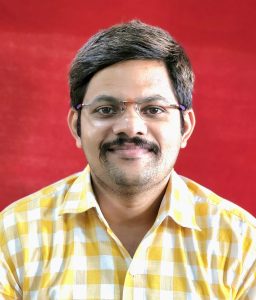
- Areas of Specialisation: Cost Accounting
- Areas of Interest: Banking & Finance and HRM

- Areas of Specialisation: Cost & Management, Accounting
- Areas of Interest: Environment / Social Entrepreneurship

- Areas of Specialisation : Accounting and Finance
- Areas of Interest: Financial Markets and Financial Management

- Areas of Specialisation: Accounting and Finance
- Areas of Interest: Financial Markets and Commodity Markets
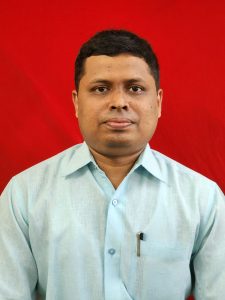
- Areas of Specialisation : Accounting and Finance
- Areas of Interest: Banking and General Management

- Areas of Specialisation: Pure Mathematics
- Areas of Interest: Differential Mathematics

- Areas of Specialisation: Accounting and Finance
- Areas of Interest: Entrepreneurship

- Areas of Specialisation: Micro Economics, Public Finance
- Areas of Interest: International Economics, Macro Economics

- Areas of Specialisation: Accounting and Finance
- Areas of Interest: Financial Accounting, Management Accounting, Business Finance, Financial services
...
Lecture Basis

- Areas of Specialization:
- Areas of Interest:

- Areas of Specialization: Computer Application
- Areas of Interest:Data science, Cybersecurity

- Areas of Specialization: Hindi language and literature
- Areas of Interest:Hindi poetry, Feminist Discourse and creative writing

- Areas of Specialization:
- Areas of Interest:

- Areas of Specialization:
- Areas of Interest:

- Areas of Specialization: Cultural studies and Modern English Literature
- Areas of Interest:Creative writing , Indian literature & Feminist literature

- Areas of Specialization:
- Areas of Interest:
Program Structure
- Details of subjects to be offered will be shared with students at the time of admission.
- Course combinations are under consideration of Directorate of Higher Education, Government of Goa.
- Kindly read the documents on – curriculum and credit framework for undergraduate program (for more details visit the college website)
- Subject to changes as per the directions of Goa University.(*Subject to approval of DHE, Govt. of Goa)
| Semester I | |||
|---|---|---|---|
| Sr.No. | Name of the Subject | Course Code | Credit |
| 1 | Major Core- Financial Accounting | COM-100 | 4 |
| 2 | Minor - Principles and Practice Management | COM-111 | 4 |
| 3 | MC-E-Commerce/Mathematical Techniques in Competitive Exam | MAT-131/CSA-131 | 3 |
| 4 | AEC- Communicative English : Written and Spoken | ENG-151 | 2 |
| 5 | VAC- Environmental Studies I | VAC101 | 2 |
| 6 | VAC- Constitutional values and obligations | VAC-104 | 2 |
| 7a | SEC-Business Mathematics I | COM-142 | 3 |
| 7b | SEC-Soft Skill and Personality Development | COM-143 | 3 |
| Semester II | |||
|---|---|---|---|
| Sr.No. | Name of the Subject | Course Code | Credit |
| 1 | Major: Elements of Cost | COM-101 | 4 |
| 2 | Minor: Fundamentals of Banking | COM - 112 | 4 |
| 3 | MC: Descriptive Statistics/Green Computing | MAT-132/CSA-132 | 3 |
| 4 | VAC3: E-Waste Management | VAC-111 | 2 |
| 5 | VAC4: Health and Physical Education | VAC-118 | 2 |
| 6 | AEC: Digital Content creation in English | ENG-152 | 2 |
| 7a | SEC - Business Mathematics II | COM-147 | 3 |
| 7b | SEC - Corporate Secretaryship | COM-148 | 3 |
| Semester III | |||
|---|---|---|---|
| Sr.No. | Name of the Subject | Course Code | Credit |
| 1 | Major - Public Economics | COM-200 | 4 |
| 2 | Major - CFA - Government Accounting | CFA-201 | 4 |
| 3 | Minor- CFA - Specialized Accounting | CFA-211 | 4 |
| 4 | Major - CCA - Methods of Costing I | CCA-201 | 4 |
| 5 | Minor - CCA - Business Environment | CCA-211 | 4 |
| 6 | Major- CBM - Marketing Management | CBM-201 | 4 |
| 7 | Minor - CBM - Business Finance | CBM-211 | 4 |
| 8 | MC - Cyber Laws and Ethics | CSA-231 | 3 |
| 9 | MC - Metaverse and Literature | ENG-231 | 3 |
| 10 | AEC - Sampreshan Kaushal (Communication Skill) | KON-251 | 2 |
| 10 | AEC - Sampreshan Kaushal (Communication Skill) | HIN-251 | 2 |
| 11 | SEC - Business Data Analysis | COM-242 | 3 |
| 12 | SEC - Accounting Software Application | COM-241 | 3 |
| Semester IV | |||
|---|---|---|---|
| Sr.No. | Name of the Subject | Course Code | Credit |
| 1 | Major - Fundamentals of Macroeconomics for Business | COM-202 | 4 |
| 2 | Major - CFA - Financial Statement Analysis | CFA-203 | 4 |
| 3 | Major - CFA - Indirect Taxes | COM-204 | 4 |
| 4 | Major - CFA - Forensic Accounting | CFA-205 | 2 |
| 5 | Minor - CFA - Accounting for Service Organisations (VET) | COM-221 | 4 |
| 6 | Major - CCA - Methods of Costing II | CCA-203 | 4 |
| 7 | Major - CCA - Indirect Taxes | COM-204 | 4 |
| 8 | Major - CCA - Marginal Costing | CCA-205 | 2 |
| 9 | Minor - CCA - Strategic Performance Management (VET) | CCA-221 | 4 |
| 10 | Major - CBM - Services Marketing | CBM-203 | 4 |
| 11 | Major - CBM - Event Management | CBM-204 | 4 |
| 12 | Major - CBM - Brand Management | CBM-205 | 2 |
| 13 | Minor - CBM - Digital Marketing (VET) | CBM-221 | 4 |
| 14 | AEC - Sambhhashan Kala/Basic Knowledge of Konkani | HIN-252/KON-252 | 2 |
| Semester V | |||
|---|---|---|---|
| Sr.No. | Name of the Subject | Course Code | Credit |
| 1 | Major CFA - Indian Economy | COM-300 | 4 |
| 2 | Major CFA - Advanced Corporate Accounting | CFA-301 | 4 |
| 3 | Major CFA- Direct Tax - I | COM-302 | 4 |
| 4 | Major CFA- Research Process | COM-303 | 2 |
| 5 | Minor CFA- Principles and Practice of Auditing (VET) | CFA-321 | 4 |
| 6 | Internship CFA - Internship | COM-361 | 2 |
| 7 | Major CCA - Indian Economy | COM-300 | 4 |
| 8 | Major CCA - Techniques of Costing | CCA-301 | 4 |
| 9 | Major CCA- Direct Tax - I | COM-302 | 4 |
| 10 | Major CCA- Research Process | COM-303 | 2 |
| 11 | Minor CCA - Cost and Management Audit (VET) | CCA-321 | 4 |
| 12 | Internship CCA - Internship | COM-361 | 2 |
| 13 | Major CBM - Indian Economy | COM-300 | 4 |
| 14 | Major CBM - Human Resource Management | CBM-301 | 4 |
| 15 | Major CBM - Retail Management | CBM-302 | 4 |
| 16 | Major CBM- Research Process | COM-303 | 2 |
| 17 | Minor CBM - Supply Chain and Logistic Management (VET) | CBM-321 | 4 |
| 18 | Internship CBM - Internship | COM-361 | 2 |
| Semester VI | |||
|---|---|---|---|
| Sr.No. | Name of the Subject | Course Code | Credit |
| 1 | Major CFA - International Economics | COM-304 | 4 |
| 2 | Major CFA - Financial Reporting and Sustainability Practices | CFA-305 | 4 |
| 3 | Major CFA - Direct Tax - II | COM-306 | 4 |
| 4 | Major CFA - Project | CFA-307 | 4 |
| 5 | Minor CFA - E-Filing of Income Tax and GST Returns (VET) | COM-322 | 4 |
| 6 | Major CCA - International Economics | COM-304 | 4 |
| 7 | Major CCA - Corporate Restructuring and Valuation | CCA-305 | 4 |
| 8 | Major CCA - Direct Tax - II | COM-306 | 4 |
| 9 | Major CCA - Project | CCA-307 | 4 |
| 10 | Minor CCA - E-Filing of Income Tax and GST Returns (VET) | COM-322 | 4 |
| 11 | Major CBM - International Economics | COM-304 | 4 |
| 12 | Major CBM - Entrepreneurship Development | CBM-305 | 4 |
| 13 | Major CBM - International Marketing | CBM-306 | 4 |
| 14 | Major CBM - Project | CBM-307 | 4 |
| 15 | Minor - Tourism and Travel Management (VET) | CBM-322 | 4 |
Time Table
| Academic Year | Exam Record |
2023-24 | Click to view |
Eligibility
OC-66.2 Eligibility for the admission Eligibility for admission leading to the Degree of Bachelor of Commerce/Bachelor of Commerce (Honours) shall be as follows:
2.1 Eligibility for admission to Semester I & II (in the first year) B.Com./ B.Com (Hon.) Programme:
...
Subject Allocation
| Particular | View |
Subject Allocation for B.COM |
Curriculum and Credit Framework for Undergraduate
| Particular | View |
Curriculum and Credit Framework for Undergraduate |
Academic Achievements
| Academic Year | Name | Percentage |
| 2022-23 | Ms. Nisha Narvekar | 78.2 % |
| 2021-22 | Ms. Gayatri Kamat | 85.58 % |
| 2020-21 | Ms. Vaishnavi Kamat | 85.58 % |
| 2019-20 | Miss. Dipali Satpute | 81.5 % |
| 2018-19 | Ms. Anishka Palekar | 77.30 % |
| 2017-18 | Mr. Saurabh S. Gawas | 80 % |
| 2016-17 | Ms. Vikas N. Sharma | 70 % |
| 2015-16 | Ms. Sailee C. Velip | 76.23 % |
| 2014-15 | Ms. Pragati P. Mokashi | 77.54 % |